

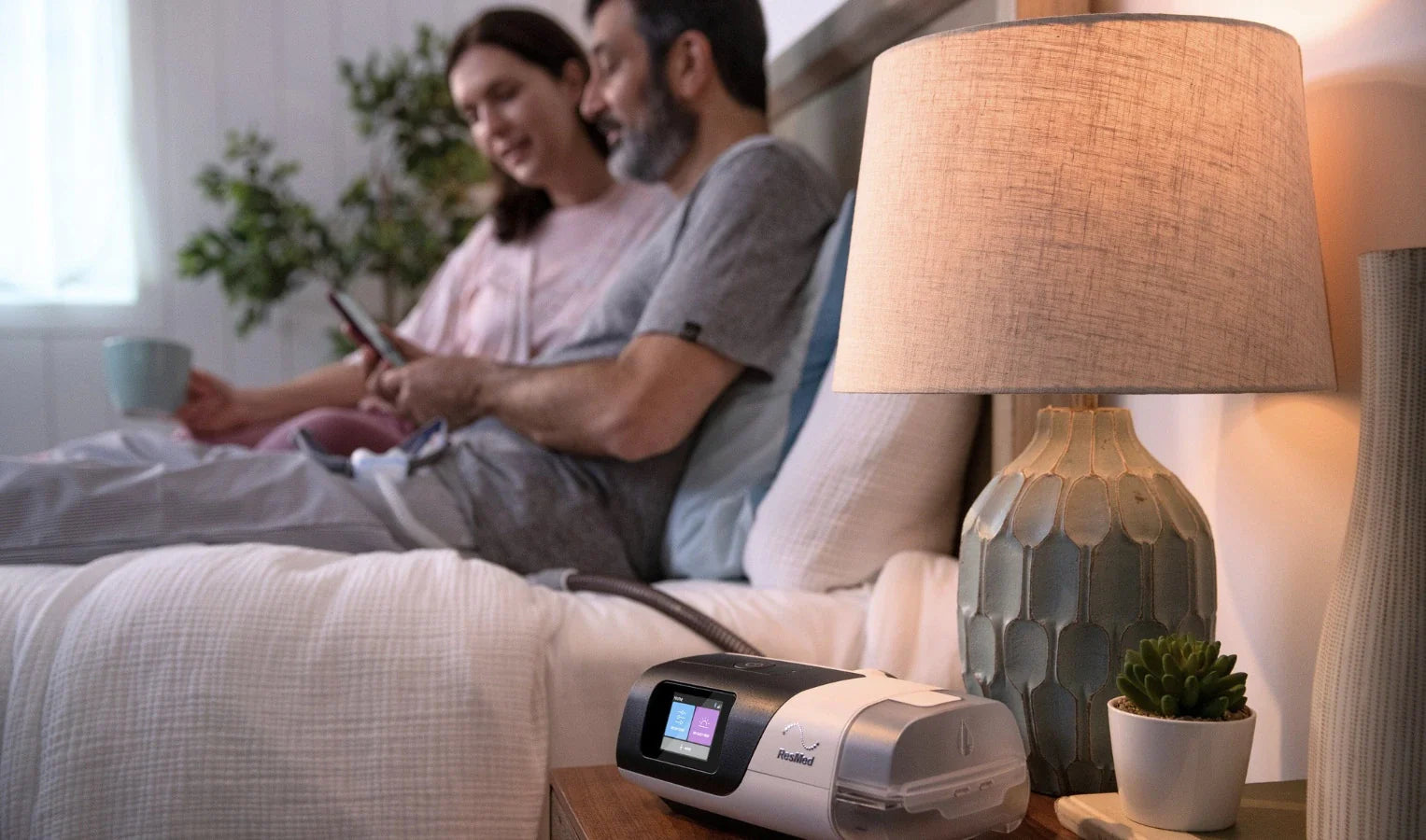
Proper CPAP cleaning and storage directly affect how long your machine lasts and how well it works each night. Skip the routine and you risk bacteria buildup, mold in the tubing, and a machine that underperforms. Follow it consistently and your equipment can serve you reliably for years. This guide covers everything you need: a simple daily and weekly cleaning routine, the right way to store your machine at home, tips for travelling with your CPAP, and a clear parts replacement schedule.
Your CPAP Cleaning Routine: Daily and Weekly Steps
CPAP cleaning does not have to take long. In fact, a quick daily habit combined with a slightly deeper weekly clean covers most of what your machine needs. The key is consistency, because moisture and skin oils accumulate fast inside a mask that sits against your face for seven or eight hours every night.
Every morning, wipe down your mask cushion and frame with a CPAP mask wipe or mild soap and warm water. This removes the oils, sweat, and residue that build up overnight. Rinse the humidifier water chamber and let it air dry. Never leave stagnant water sitting inside it because that is where bacteria thrive.
Each week, go a step further. Wash your tubing with warm soapy water, rinse it thoroughly, and hang it to dry completely before reattaching. Wash the humidifier chamber more carefully, and inspect your mask cushion, headgear, and frame for any cracks or wear. Additionally, check your filters. Disposable filters need replacing monthly, and reusable foam filters need a rinse every week.
One important rule: never reattach damp tubing. Moisture trapped inside the hose creates exactly the conditions mold needs to grow. Always allow every component to dry fully before putting your machine back together.
CPAP Storage: How to Keep Your Machine Safe at Home
Where and how you store your CPAP matters more than most people realize. A machine left on a dusty bedside table or exposed to direct sunlight will degrade faster than one stored with a little care. However, proper CPAP storage is straightforward once you know what to avoid.
Store your machine on a flat, stable surface away from direct sunlight and heat sources. Sunlight degrades plastic parts over time, and excess heat can warp internal components. Keep the area around the machine clear so air can circulate. Never store it inside a closed drawer while it is still warm from use.
When you are not using your CPAP for more than a day or two, store it with the mask and tubing disconnected. This allows any residual moisture to escape and prevents mildew from forming in joints and connectors. Use a clean, breathable cover or cloth to keep dust off the machine without trapping moisture underneath.
For long-term storage, for example if you are switching machines or putting a backup unit away, empty the humidifier completely, clean all components thoroughly, and allow everything to dry for several hours before packing it away. Store the unit in a cool, dry place, ideally in its original box or a purpose-made CPAP travel case.
Travelling with Your CPAP: The Right CPAP Bag Makes All the Difference
Travelling with a CPAP machine requires a bit more planning, but it is entirely manageable. The right CPAP bag protects your equipment, keeps everything organized, and makes airport security far less stressful. A good travel case holds your machine, mask, tubing, and power adapter without forcing you to repack every trip.
Hard-shell cases offer the most protection for checked luggage. Soft cases or purpose-built CPAP bags work well for carry-on travel, where weight and size matter more. If you travel frequently, consider a dedicated travel CPAP machine. The ResMed AirMini, for example, weighs less than a pound and fits in a small bag, making it ideal for overnight trips or long-haul flights.
When you travel, bring distilled water for your humidifier. Tap water in different cities or different countries contains varying mineral levels. These minerals build up inside the water chamber and can damage it over time. Therefore, distilled water is always the safer choice, wherever you are.
Pack your CPAP in your carry-on when flying. Airlines and security agencies treat CPAP machines as medical devices, so they generally do not count against your carry-on allowance. In contrast, checked luggage risks damage from rough handling, and that is not a risk worth taking with a device this important.
CPAP Maintenance: When to Replace Each Part
Good CPAP maintenance is as much about replacement timing as it is about cleaning. Parts wear out, degrade, and lose their effectiveness even when they look fine from the outside. Following a replacement schedule keeps your therapy consistent and helps you avoid unexpected problems.
Here is a quick reference for how often to replace common CPAP parts:
| Component | Replacement Frequency | Why It Matters |
|---|---|---|
| Disposable filters | Every 2 to 4 weeks | Clogged filters restrict airflow and reduce therapy quality |
| Reusable foam filters | Every 6 months | Break down over time even with regular rinsing |
| Mask cushion | Every 1 to 3 months | Silicone softens and loses its seal, causing air leaks |
| Mask headgear | Every 6 months | Elastic stretches and reduces mask stability |
| CPAP tubing | Every 3 to 6 months | Cracks and discolouration signal bacterial risk |
| Humidifier water chamber | Every 6 to 12 months | Mineral deposits reduce humidification efficiency |
| Full mask frame | Every 6 to 12 months | Structural wear can cause seal failures and leaks |
It is worth noting that some parts need replacing sooner if you notice cracks, discolouration, unusual smells, or a change in fit. Do not wait for a visible problem. Schedule replacements proactively. You can find a full guide to CPAP supplies and replacement schedules on the PAPSmart blog.
Frequently Asked Questions
How often should I clean my CPAP machine?
Wipe your mask cushion and rinse your water chamber every day. Do a deeper clean of the tubing, humidifier, and mask parts once a week. This two-step routine keeps bacteria and mold from building up without taking much time.
Can I use tap water in my CPAP humidifier?
Distilled water is strongly recommended. Tap water contains minerals that accumulate inside the water chamber over time, reducing performance and potentially shortening the life of the component. Distilled water eliminates that risk entirely.
What is the best way to store a CPAP machine when not in use?
Store it on a flat, stable surface away from direct sunlight and heat. Disconnect the mask and tubing so moisture can escape. For longer-term storage, clean all parts thoroughly, let them dry completely, and pack the machine in a protective case in a cool, dry location.
Do I need a special CPAP bag for travel?
A dedicated CPAP bag or travel case is worth it. These cases are sized to fit your machine, mask, tubing, and power adapter together in one organized, protective package. Many airlines accept CPAP bags as a separate carry-on item because the machine qualifies as medical equipment.
How do I know when to replace my CPAP mask?
Replace the cushion every one to three months, or sooner if you notice air leaking around the edges. Check the headgear every six months. If it feels loose even on the tightest setting, it has lost its elasticity. A poor-fitting mask reduces therapy effectiveness significantly, so do not delay replacement.
Keep Your Therapy Running at Its Best
Consistent CPAP cleaning and smart storage habits are the simplest things you can do to protect your investment and get the most from your therapy. Clean daily, clean deeply once a week, replace parts on schedule, and store your equipment properly at home and on the road. Finally, make sure your travel setup is ready for wherever life takes you. Browse CPAP supplies and accessories at PAPSmart to find everything you need for long-term CPAP care, including cleaning kits, replacement parts, and travel cases built for Canadian CPAP users.


