

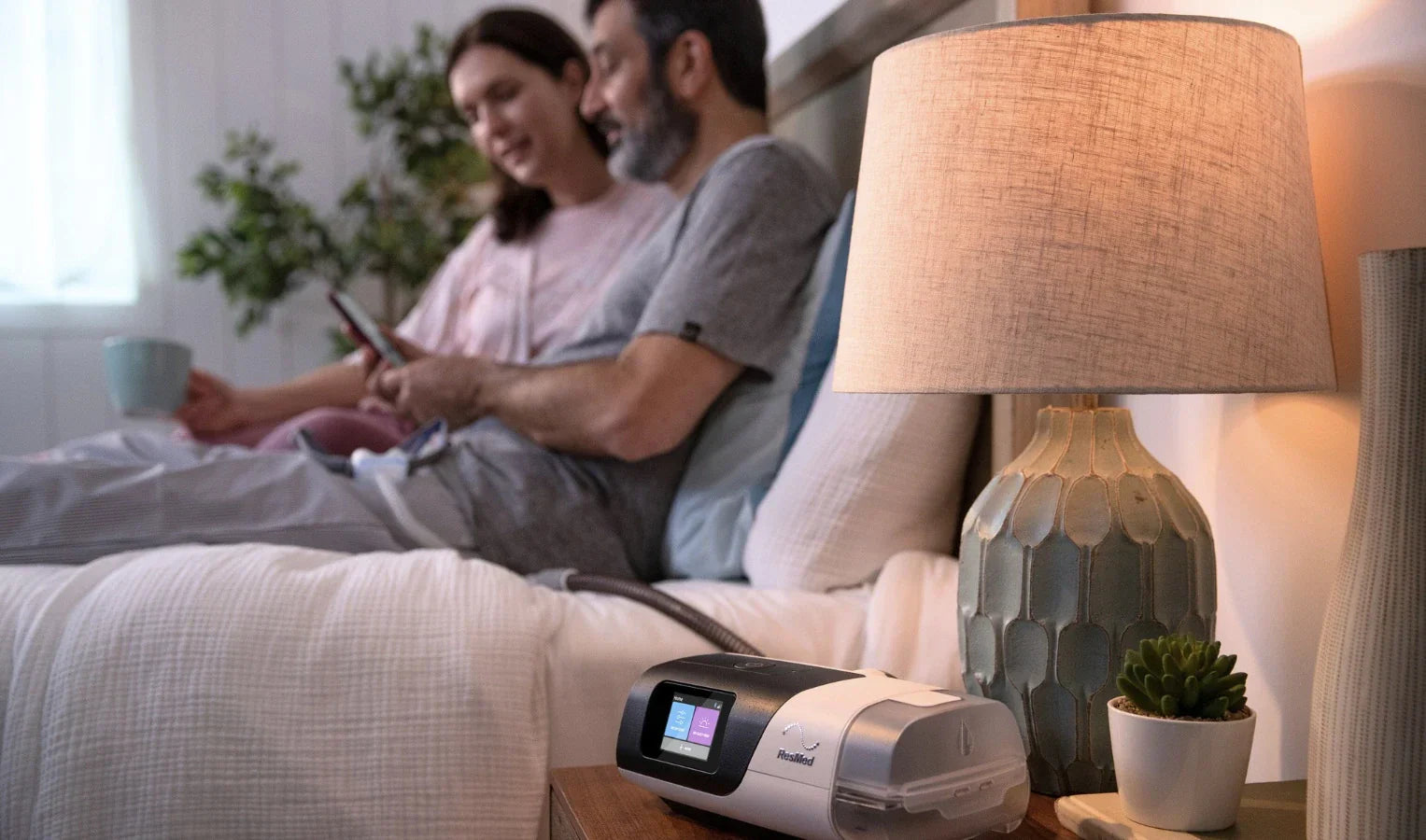
Facial hair and CPAP masks have a well-known conflict. Silicone cushions rely on forming a continuous seal against your skin, and a beard or moustache interrupts that contact. The result is air escaping around the edges, which reduces therapy effectiveness and often wakes you up. However, this does not mean you have to choose between your beard and your sleep apnea treatment. The right mask design makes a significant difference, and several options work reliably even with significant facial hair.
Why Beards Cause CPAP Leaks
Most CPAP mask cushions are made from soft silicone. The seal depends on that silicone sitting flush against bare skin. When facial hair sits between the cushion and your skin, it creates small gaps that air finds immediately. The more hair, the more gaps, and the harder the seal becomes to maintain.
The solution is to choose a mask that minimises how much silicone needs to contact the areas where your beard grows. Nasal pillow masks seal inside the nostrils, entirely bypassing the chin, upper lip, and cheek areas where most facial hair sits.
Best Nasal Pillow Masks for Beards
Nasal pillow masks are the best starting point for anyone with facial hair. The cushioned inserts sit just inside the nostrils, so there is no silicone pressing against your upper lip, chin, or cheeks. The seal is entirely independent of your beard.
The ResMed AirFit P10 is the most consistently recommended nasal pillow mask for bearded CPAP users. It is extremely lightweight, uses soft QuietAir cushion tips, and comes with three sizes so you can find the right fit for your nostril shape.
The Philips Respironics DreamWear Nasal Pillow routes the hose through the headgear to the top of the head, keeping everything off the face. For users who move around during the night, the top-of-head hose routing reduces the chance of the mask being pulled during sleep.
Browse all nasal pillow CPAP masks at PAPSmart
Best Nasal Masks for Beards
The ResMed AirFit N30i uses a curved cradle cushion that sits under the nose rather than forming a traditional seal across the upper lip. This design largely avoids the moustache area, making it a practical option for users who want a nasal mask but have had sealing issues with traditional designs.
The ResMed AirTouch N20 uses a memory foam cushion rather than silicone. Memory foam conforms to the shape of your face with gentle pressure and adapts around hair rather than being displaced by it, which can improve the seal for users with lighter facial hair.
Browse all nasal CPAP masks at PAPSmart
Beard-Friendly CPAP Masks: Quick Comparison
| Mask | Type | Seal Location | Best Beard Type |
| ResMed AirFit P10 | Nasal pillow | Inside nostrils | Any beard length or density |
| Philips DreamWear Nasal Pillow | Nasal pillow | Inside nostrils | Any beard, active sleepers |
| ResMed AirFit N30i | Nasal under-nose | Under nose, avoids upper lip | Moustaches, trimmed beards |
| ResMed AirTouch N20 | Nasal (memory foam) | Nose bridge and upper lip | Light to moderate facial hair |
What About Full-Face Masks With Beards?
Full-face masks are the hardest mask type to use with a beard because the cushion must seal across both the nose bridge and the chin. The Fisher and Paykel Simplus has a RollFit seal that pivots at the nose bridge, giving it slightly more flexibility when sealing against uneven surfaces.
For full-face users with heavier beards, CPAP mask liners are worth considering. These thin fabric barriers sit between the cushion and your skin and can improve the seal by filling small gaps created by facial hair.
Browse all full-face CPAP masks at PAPSmart
Practical Tips for CPAP Users With Facial Hair
Washing your face before putting on your mask removes skin oils that reduce cushion grip. Trimming the beard area around the seal zone improves contact without requiring you to shave entirely. Replacing your cushion on schedule matters more for bearded users since facial hair accelerates silicone wear.
How to Know When Your Cushion Needs Replacing
Cushion replacement matters more for bearded CPAP users than for anyone else. Facial hair creates micro-abrasions on silicone over time, breaking down the material faster than normal skin contact would. A cushion that looks fine visually may have already lost the flexibility it needs to seal properly around facial hair.
The most reliable sign that your cushion needs replacing is a sudden increase in leaks that adjusting the mask does not fix. If your machine's leak rate has crept up over recent weeks and tightening the headgear is the only thing keeping it manageable, the cushion is almost certainly the culprit. Overtightening to compensate for a worn cushion causes facial marks, discomfort, and headaches, and it still does not fix the underlying problem.
As a general rule, bearded users should plan to replace silicone cushions every four to six weeks rather than the standard two to three months. Memory foam cushions like the AirTouch N20 have a shorter replacement window regardless of facial hair, typically every four to six weeks, because the foam compresses with use and loses its adaptive fit over time.
Keeping a spare cushion on hand means you are never caught waiting on a delivery when your seal starts to go. Browse CPAP mask cushions and replacement parts at PAPSmart to stock up before you need them.
Frequently Asked Questions
Can I use a CPAP machine if I have a beard?
Yes. The right mask design makes beard-friendly CPAP therapy entirely achievable. Nasal pillow masks are the most reliable starting point because the seal bypasses the beard entirely.
Do I need to shave to use a CPAP mask?
No. Nasal pillow masks and under-nose nasal masks both work effectively with beards of most lengths and densities.
Why does my CPAP mask keep leaking through my beard?
Facial hair creates gaps between the silicone cushion and your skin. Switch to a mask design that seals away from the beard area, such as a nasal pillow mask that seals inside the nostrils.
Are CPAP mask liners effective for bearded users?
Yes, in some cases. Mask liners sit between the cushion and your skin and can help fill small gaps created by light facial hair. They work best as a supplement to good mask fit.


