

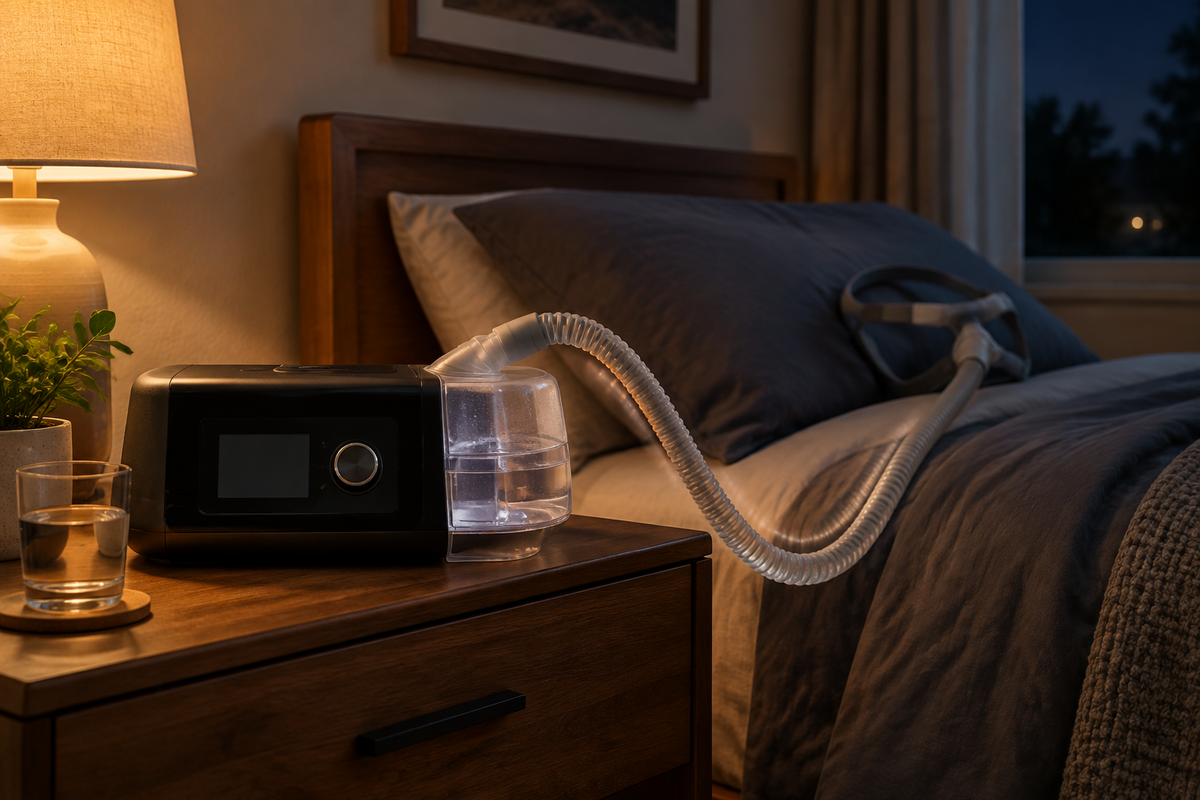
If you have ever woken up with water droplets in your CPAP hose or a soaking wet mask cushion, you have experienced rainout. It is one of the most common comfort complaints among CPAP users, and it has a straightforward fix: heated tubing. But heated tubing is not the right choice for every user in every situation, and understanding the difference between heated and standard tubing helps you decide whether the upgrade is worth it for you.
What Is the Difference Between Heated and Standard CPAP Tubing?
Standard CPAP tubing is a simple, unheated hose that carries pressurized air from your machine to your mask. It does its job effectively, but it has one significant weakness: the air inside the hose cools as it travels from the heated humidifier chamber to your mask. When warm, humid air from the humidifier meets the cooler walls of an unheated hose, condensation forms. That condensation collects inside the tube and, at its worst, ends up pooling in your mask or causing a loud gurgling noise that wakes you up mid-therapy.
Heated CPAP tubing contains a thin electrical heating element that runs the length of the hose. This keeps the air warm all the way from the humidifier chamber to your mask, preventing the temperature drop that causes condensation. The result is consistent, warm, humidified air that arrives at your mask without turning into water droplets along the way.
What Causes Rainout?
Rainout happens when the humidity level in your CPAP system is higher than your tubing can maintain at room temperature. The warmer and more humid the air leaving the humidifier, the more likely it is to condense when it hits a cool, unheated hose. Cold bedrooms make rainout worse. Running the humidifier on a higher setting makes rainout worse. The combination of a cool room and a high humidity setting is where most users experience the problem most severely.
There are a few ways to reduce rainout without heated tubing. Turning the humidifier setting down reduces the moisture in the air, which reduces condensation. Keeping the machine at a lower level than your head means any water droplets run back toward the machine rather than toward your mask. Wrapping the hose in a soft sleeve reduces the temperature difference between the air inside and the cooler room air. These solutions help but do not fully solve the problem the way heated tubing does.
Heated vs Standard CPAP Tubing: Side-by-Side Comparison
| Feature | Standard Tubing | Heated Tubing |
|---|---|---|
| Rainout prevention | No | Yes |
| Compatible with humidifier | Yes | Yes (required for full benefit) |
| Works on battery power | Yes | Partially (may need to disable heating element) |
| Price | Lower | Higher |
| Best for cold bedrooms | Less effective | Yes |
| Travel use | Yes | Yes, but battery drain is higher |
| Replacement schedule | Every 3 to 6 months | Every 6 to 12 months |
ResMed ClimateLineAir: The Heated Tubing Option for AirSense Users
For ResMed AirSense 10 and AirSense 11 users, the ClimateLineAir heated tube is the purpose-built heated tubing option. It connects directly to the machine and communicates with the Climate Control system to automatically adjust humidity and temperature based on your room conditions. When paired with the HumidAir humidifier and Climate Control Auto mode, the system manages humidity delivery without requiring manual adjustment, which is the most seamless solution available for rainout.
The ClimateLineAir comes in standard and slim versions. The slim version is thinner and lighter, which some users find more comfortable to manage during sleep, particularly side sleepers who find the standard hose creates more drag against the pillow.
For the Philips DreamStation 2, a heated tube is included in the box as part of the machine package. This is one of the notable differences between the AirSense 11 and the DreamStation 2: ResMed sells the heated tube separately while Philips includes it.
Is Heated Tubing Worth the Upgrade?
If you experience rainout, heated tubing is the most effective solution available and the upgrade is unambiguously worth it. Waking up with water in your mask or a gurgling hose significantly disrupts sleep and therapy. Heated tubing eliminates the problem rather than managing it.
If you do not experience rainout and are comfortable with your current humidity settings, standard tubing may be entirely sufficient. Users in warm bedrooms, those who run their humidifier on lower settings, or those who do not use a humidifier at all have no practical reason to upgrade to heated tubing.
For travel, particularly camping or off-grid use where battery power is a concern, standard tubing is the better choice. Heated tubing draws additional power from the battery, reducing the number of therapy nights per charge by approximately 30 to 50 percent depending on the machine and settings.
How to Choose the Right CPAP Tubing
The most important step is confirming compatibility with your machine. ResMed heated tubing is designed specifically for ResMed machines and will not work with Philips or Fisher and Paykel devices. Standard tubing uses a universal 22mm connection and is broadly compatible across brands, but always confirm before purchasing.
Standard tubing should be replaced every three to six months. Heated tubing typically lasts longer, up to six to twelve months, but should be inspected regularly near the connectors where the heating element is under the most mechanical stress.
Browse the full range of CPAP tubing in Canada at PAPSmart including standard, heated, and slim options for ResMed, Philips Respironics, and Fisher and Paykel machines.
Frequently Asked Questions
What is rainout in a CPAP machine?
Rainout is the condensation of humid air inside CPAP tubing, which causes water droplets to collect in the hose or mask. It happens when warm, humid air from the humidifier cools inside an unheated tube. Heated tubing prevents rainout by keeping the air warm along the full length of the hose.
Does heated tubing use more electricity?
Yes, slightly. The heating element draws a small amount of additional power. For standard home use connected to wall power, the difference is negligible. For battery-powered operation, the heating element reduces the number of therapy nights per charge, so most users disable it when running on battery.
Is the ResMed ClimateLineAir compatible with both the AirSense 10 and AirSense 11?
There are separate versions for each machine. The ClimateLineAir 10 is designed for the AirSense 10, and the ClimateLineAir 11 is designed for the AirSense 11. They are not interchangeable, so confirm your machine model before purchasing.
How often should I replace my CPAP tubing?
Standard tubing every three to six months. Heated tubing every six to twelve months. Replace either sooner if you notice cracks, discolouration, an unusual smell, or visible damage near the connectors.
Can I use heated tubing without a humidifier?
Technically yes, but there is no benefit to using heated tubing without a humidifier. The purpose of heated tubing is to prevent condensation of humid air. Without a humidifier delivering moisture, there is nothing to condense and standard tubing works just as well.


