

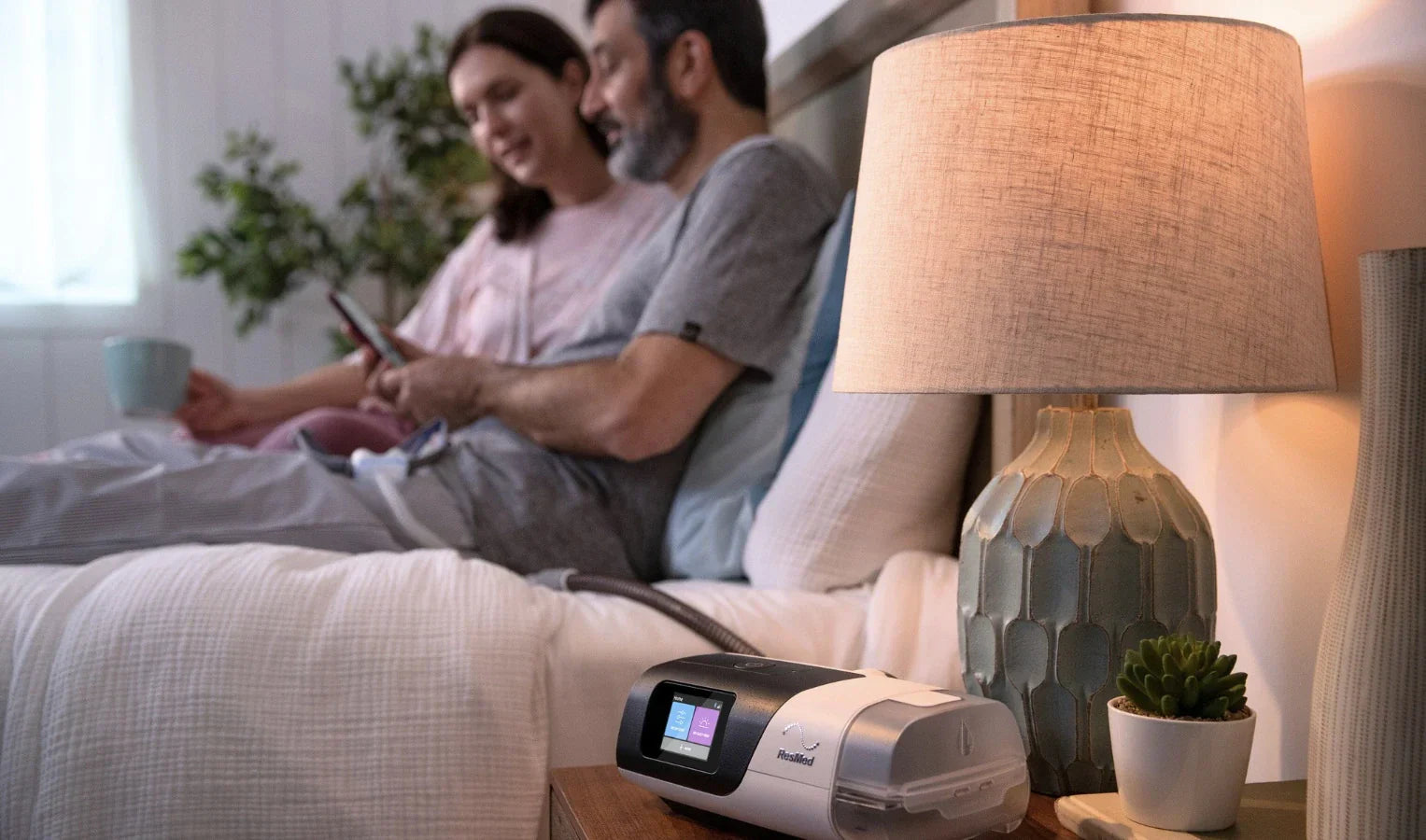
Before you can buy a CPAP machine in Canada, you need a prescription. This is not a bureaucratic hurdle. It is how your sleep specialist determines the right pressure settings for your airway, because using a CPAP at the wrong pressure is either ineffective or uncomfortable. The good news is that the process is more straightforward than most people expect, and in many provinces you can move from first appointment to prescription in a matter of weeks.
Why You Need a Prescription for CPAP in Canada
CPAP machines are classified as medical devices in Canada. A valid prescription is required to purchase one from any authorized retailer. Your prescription specifies the machine type, the therapy pressure or pressure range, and any additional features your treatment requires, such as a bilevel mode for BiPAP therapy.
Using a CPAP without a proper diagnosis and prescription means guessing at pressure settings. Too low and the therapy does not prevent airway collapse. Too high and breathing feels forced and uncomfortable. A sleep study takes the guesswork out entirely.
Step 1: Talk to Your Family Doctor
The starting point for most Canadians is their family doctor. Describe your symptoms clearly: loud snoring, waking up gasping, morning headaches, or excessive daytime sleepiness are the most common indicators. Your doctor will assess whether a sleep study referral is appropriate.
If you do not have a family doctor, walk-in clinics can also issue referrals for sleep studies in most provinces. Some sleep clinics accept self-referrals as well.
Step 2: Complete a Sleep Study
A sleep study measures how many times per hour your breathing is interrupted during sleep. This number, called the apnea-hypopnea index (AHI), determines whether you have sleep apnea and how severe it is.
There are two main options in Canada:
- Home sleep test (HST): a portable monitoring device worn overnight at home. This is the most common first step and is covered by most provincial health insurance plans with a doctor's referral.
- In-lab polysomnography: a full overnight study at a sleep clinic with comprehensive monitoring. Typically reserved for complex cases or when a home test is inconclusive.
Step 3: Receive Your Sleep Apnea Diagnosis
Once your results are reviewed, a sleep physician will confirm whether you have sleep apnea and classify the severity. Mild is an AHI of 5 to 14 events per hour. Moderate is 15 to 29. Severe is 30 or above.
For the vast majority of Canadians with obstructive sleep apnea, treatment is CPAP therapy. Your physician will also determine whether a fixed-pressure CPAP or an auto-adjusting APAP model is more appropriate.
Step 4: Get Your CPAP Prescription
Your sleep physician will issue a CPAP prescription that includes your therapy pressure settings or pressure range. Your prescription will typically specify:
- Machine type: CPAP, APAP, or BiPAP
- Pressure settings: a fixed pressure (e.g. 10 cm H2O) or a range (e.g. 6 to 16 cm H2O for auto machines)
- Humidification: whether a humidifier is recommended
Step 5: Buy Your CPAP Machine
With a valid prescription in hand, you can purchase your CPAP machine from any authorized Canadian retailer. Buying online from a dedicated CPAP retailer like PAPSmart is typically significantly more affordable than purchasing through a sleep clinic, with identical equipment and full manufacturer warranties.
Does Insurance Cover CPAP in Canada?
Many private health insurance plans in Canada cover CPAP equipment partially or fully with a valid prescription. Provincial coverage varies. Ontario's Assistive Devices Program (ADP) covers a portion of CPAP costs for eligible residents. Alberta, British Columbia, and other provinces have their own programs with different eligibility criteria.
Frequently Asked Questions
How long does it take to get a CPAP prescription in Canada?
From your first doctor's appointment to receiving a prescription, most people complete the process in four to eight weeks. Home sleep tests have shortened this considerably.
Can I buy a CPAP machine without a prescription in Canada?
No. CPAP and BiPAP machines are classified as medical devices and require a valid prescription from a licensed physician in Canada.
Can my family doctor write a CPAP prescription?
Your family doctor can refer you for a sleep study, but the CPAP prescription itself is typically issued by a sleep physician or respirologist after reviewing your results.
What if my prescription expires?
CPAP prescriptions in Canada generally do not expire, though some insurance plans require a renewed prescription every few years to continue covering supplies.
Do I need a new prescription if I want to upgrade my machine?
Not always. If your new machine uses the same pressure settings, your existing prescription typically covers it.


