


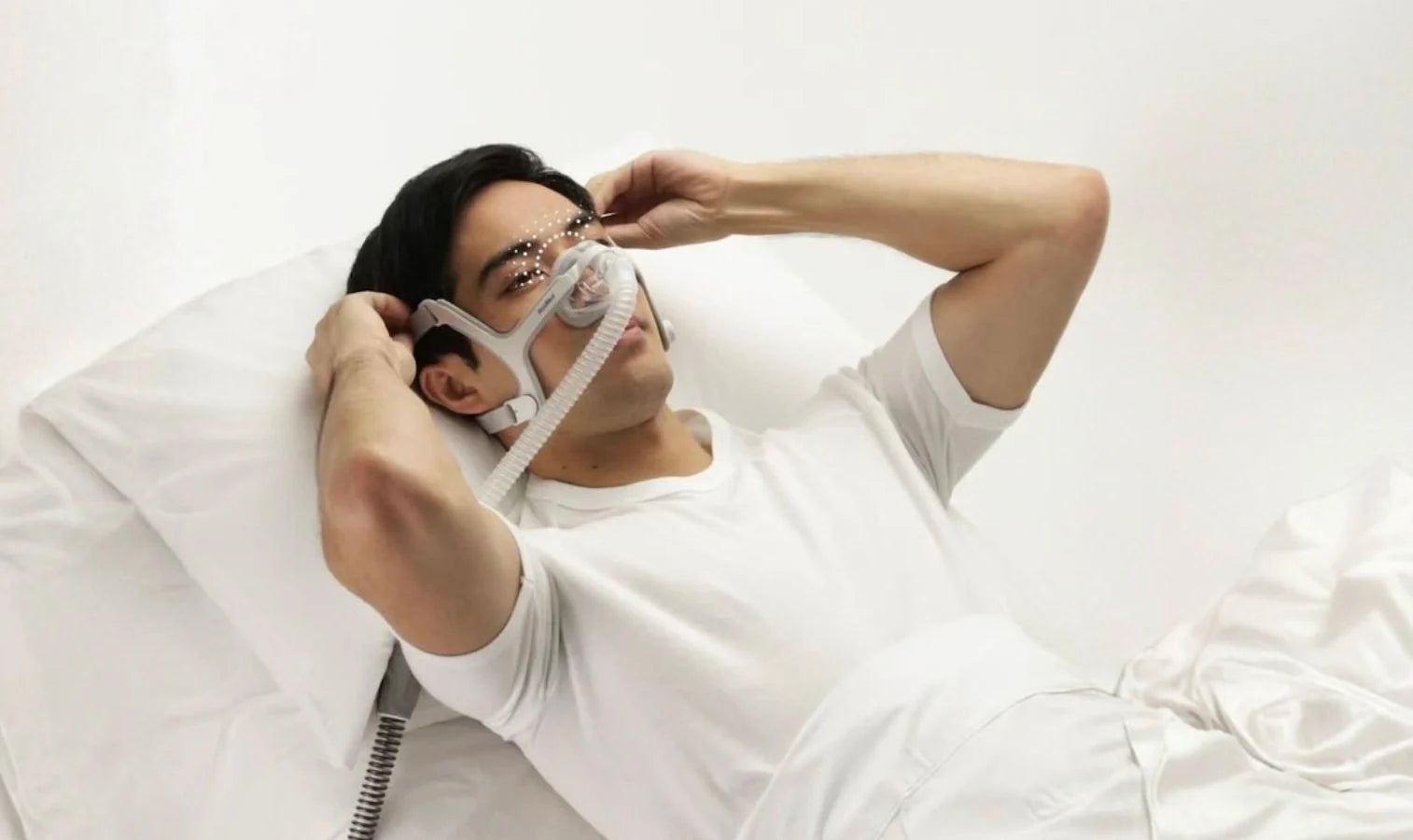
CPAP leaks are one of the most common reasons therapy stops working. If air is escaping around your mask at night, you are not getting the pressure your doctor prescribed, and your sleep apnea symptoms will return. The good news is that most CPAP air leaks come down to three fixable things: a worn-out cushion, loose headgear, or a poor mask fit. This guide walks you through how to find the cause and fix it fast, with the right replacement parts.
Why CPAP Leaks Happen
A CPAP mask creates a seal against your skin to deliver pressurised air. However, that seal breaks down over time. Silicone cushions wear out, stretch, and lose their shape. Headgear straps go slack and stop holding the mask in place. Even small changes in your face, like weight changes or new facial hair, can cause air to escape overnight.
The most common causes of a CPAP air leak are:
- Worn CPAP cushion: silicone degrades and loses its ability to seal
- Stretched or damaged CPAP headgear: straps lose elasticity over time
- Wrong mask size: a cushion that is too large or too small will never seal correctly
- Over-tightening: pulling straps too tight distorts the cushion and creates gaps
- Sleeping position: rolling onto a side can shift the mask and break the seal
Because CPAP leaks often get worse gradually, many users do not notice until their machine's leak report flags a problem, or until they wake up exhausted again.
How to Fix CPAP Mask Fit: Start Here
Before buying replacement parts, check your mask fit while lying down in your typical sleep position. Most people fit their mask while sitting upright, then find it shifts the moment they lie on their side. For example, a nasal mask that fits perfectly when you are upright can gap at the nose bridge the moment you roll over.
Put on your mask, start your CPAP machine, and lie in your normal sleep position. Run your fingers around the cushion edge to feel for airflow. If you feel air escaping at the nose bridge or cheeks, the cushion size or style may not suit your face shape. If the leak comes from the sides, your CPAP headgear may be stretched or adjusted unevenly.
Additionally, check that you are not over-tightening. Straps should be snug but not tight enough to leave deep marks on your skin. Over-tightening is one of the most common mistakes because it folds the cushion edge inward and creates a gap instead of closing it.
When to Replace Your CPAP Cushion
The CPAP cushion is the part that touches your face and creates the seal. It also wears out fastest. Manufacturers typically recommend replacing cushions every one to two months. However, most people wait far longer, and then wonder why their mask leaks.
Signs your cushion needs replacing:
- The silicone looks discoloured, cloudy, or cracked
- You are tightening your headgear more than you used to
- Your leak rate has climbed despite no change in how you wear the mask
- You wake up with red marks or soreness along the seal line
Replacing the cushion alone often fixes a CPAP leak completely. It is the lowest-cost fix and should always be the first thing you try. You can shop CPAP cushions in Canada by brand and mask model to find the exact replacement for your system.
When to Replace Your CPAP Headgear
CPAP headgear keeps the mask anchored to your face overnight. It stretches with use and, as a result, can no longer hold the mask firmly enough to maintain a seal. Most headgear should be replaced every six months, but active sleepers or people who wash it frequently may need to replace it sooner.
A simple test: hold your headgear up and compare the strap length to when it was new. If you have moved the adjustment clips significantly tighter over time, the elasticity is gone. In contrast, if new headgear lets you return to the original strap position and the leak stops, the old headgear was the problem.
Therefore, if a new cushion does not stop your CPAP air leak, headgear is the next place to look. Browse the full range of CPAP masks in Canada if your current mask style is no longer working for you. Sometimes the right fix is switching mask types entirely.
Comparison: Common CPAP Leak Causes and Fixes
| Leak Cause | How to Spot It | Fix | Replace How Often |
|---|---|---|---|
| Worn CPAP cushion | Discoloured silicone, increasing leaks | Replace cushion | Every 1 to 2 months |
| Stretched CPAP headgear | Straps at maximum tightness | Replace headgear | Every 6 months |
| Wrong cushion size | Air escapes at nose bridge or cheeks | Try a fit pack with multiple sizes | When sizing changes |
| Over-tightening | Deep strap marks, folded cushion edge | Loosen straps, refit from scratch | N/A, technique fix |
| Wrong mask style | Leaks only in certain sleep positions | Switch mask type (e.g. nasal to nasal pillow) | When sleep habits change |
Choosing the Right Mask for a Better Seal
Sometimes the mask style itself is the root cause of CPAP leaks. Full face masks cover the nose and mouth, which is ideal for mouth breathers. However, they also have a larger surface area to seal, so any shift during the night is more likely to create a gap. Nasal masks and nasal pillow masks have a smaller contact area, which makes maintaining a seal easier for many users.
For example, the Fisher & Paykel Simplus Full Face Mask uses a RollFit Seal that adjusts automatically at the nose bridge, which is a useful feature for anyone who has struggled to keep a full face mask seated through the night. For side sleepers, an under-the-nose design like the DreamWear positions the hose at the top of the head, reducing drag and mask movement.
Finally, if you have tried multiple cushion and headgear replacements and leaks persist, a mask fit assessment is worth considering. Many CPAP providers can help you identify whether a different size or style would give you a more reliable seal. You can also explore CPAP mask parts to replace just the component that is failing. You rarely need to replace the entire mask.
Frequently Asked Questions
Why does my CPAP mask leak even when I tighten it?
Tightening a mask further rarely stops a CPAP air leak and usually makes it worse. Over-tightening folds the cushion inward and creates a gap instead of a seal. Try loosening the straps slightly and refitting the mask from scratch, then check for leaks while lying in your sleep position. If leaks continue, the cushion or headgear likely needs replacing.
How often should I replace my CPAP cushion?
Most manufacturers recommend replacing CPAP cushions every one to two months. Silicone wears down quickly with nightly use and cleaning. A fresh cushion restores the seal without any adjustment to your headgear. If you are not replacing cushions on this schedule, a worn cushion is almost certainly contributing to your leaks.
Can the wrong cushion size cause CPAP leaks?
Yes, this is one of the most overlooked causes of CPAP mask fit problems. A cushion that is too large will splay outward and gap at the edges. One that is too small will not cover the area it needs to seal. Many masks come in fit packs with multiple cushion sizes, which makes it easy to test sizing at home.
Does facial hair cause CPAP leaks?
Facial hair, particularly a beard or moustache, can prevent a silicone cushion from forming a full seal. Nasal pillow masks are often more compatible with facial hair because they seal inside the nostrils rather than against the skin. If you have facial hair and experience leaks, a mask style switch may help more than headgear adjustment.
What is a normal CPAP leak rate?
Most CPAP machines tolerate a small leak rate and still deliver effective therapy. Your device manual or provider will give the specific threshold for your model. However, a leak rate above that threshold means you are not getting the full prescribed pressure. Check your machine's leak data regularly and aim for the lowest rate possible through good mask fit and timely part replacement.
Get a Better Seal Tonight
Most CPAP leaks have a simple fix: a new cushion, fresh headgear, or a better mask fit. Start by replacing the cushion because it is the fastest, cheapest change you can make. If that does not solve the problem, move on to headgear, then consider whether a different mask style suits your sleep position better. Keeping replacement parts on schedule is the most reliable way to keep your therapy effective. Browse replacement CPAP cushions, headgear, and full mask systems at PAPSmart's CPAP mask parts collection and get back to restful sleep.


