

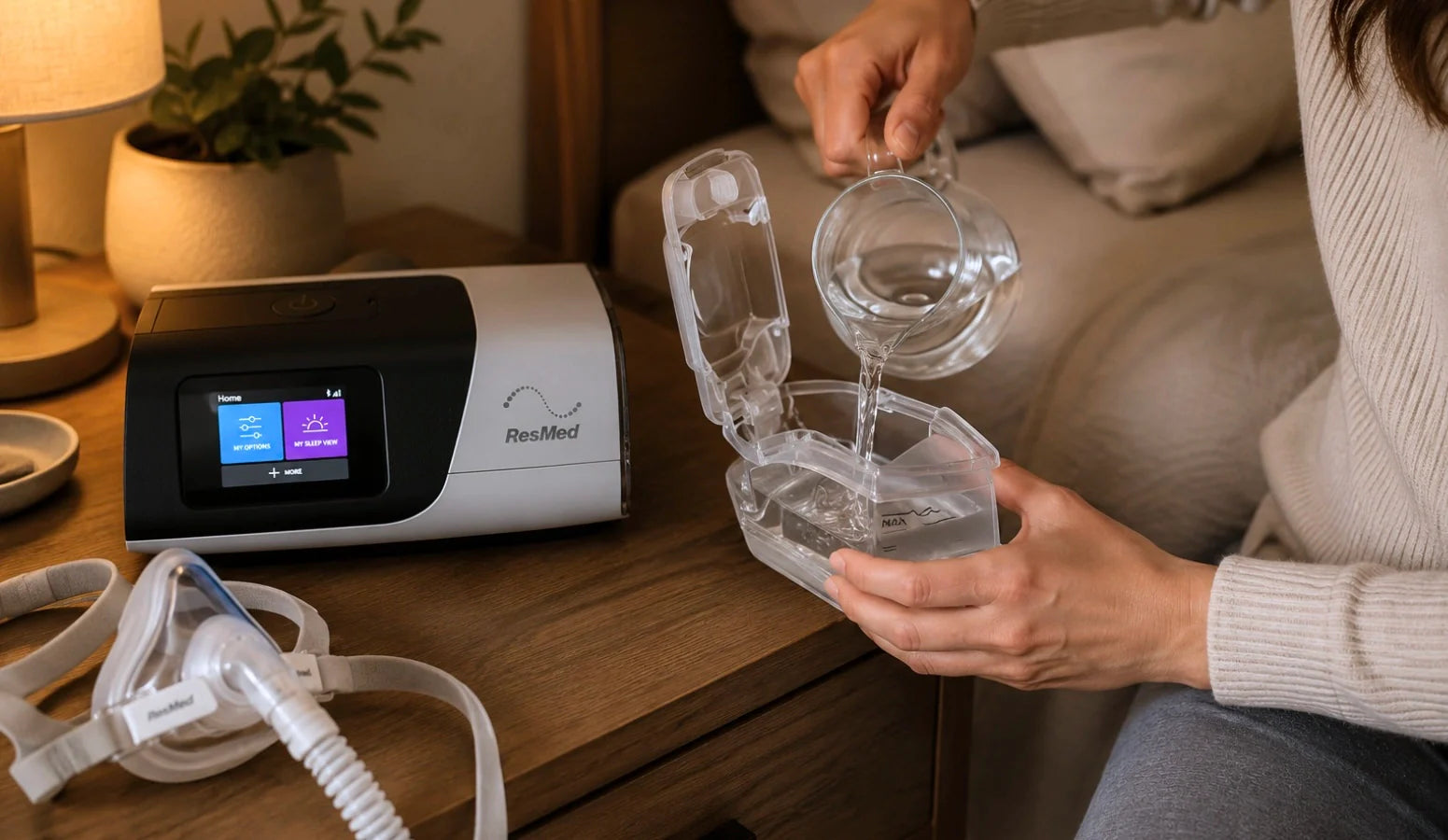
A CPAP humidifier adds moisture to the pressurized air your machine delivers. Without one, that constant airflow dries out your nose, throat, and mouth, often enough to wake you up or make you want to quit therapy altogether. If dry mouth from CPAP is keeping you off your machine, a humidifier is usually the first fix to try. You can shop CPAP humidification options in Canada to compare built-in and standalone models before you buy.
Why CPAP Comfort Depends on Moisture
CPAP pressure settings push air into your airway all night long. That air is dry by nature. As a result, the delicate tissues in your nose and throat lose moisture faster than normal breathing allows. Over time, this causes dry mouth from CPAP, nasal congestion, nosebleeds, and sore throats.
However, adding warmth and moisture to that airflow changes the experience completely. Humidifier benefits go beyond simple comfort. Adequate CPAP moisture helps you tolerate higher pressure settings without discomfort. It also reduces the chance that you'll pull off the mask in the night, which means better therapy outcomes.
Additionally, people who use a humidifier consistently report fewer side effects and are more likely to stick with treatment long term. That compliance matters because sleep apnea therapy only works if you actually use the machine every night.
Types of CPAP Humidifiers: Which One Is Right for You?
There are two main types of CPAP humidifiers: integrated (built into the machine) and standalone (added on separately). A third option, waterless humidification, is popular for travel.
Integrated humidifiers sit inside machines like the ResMed AirSense 11 with HumidAir and ClimateLineAir heated tubing. The machine controls humidity levels automatically based on room temperature and your pressure settings. This is the most seamless option because everything works as a single system.
Standalone humidifiers snap onto an existing CPAP unit. They give you more flexibility. For example, you can remove the humidifier when you travel. In contrast, integrated units are more compact and require fewer connections.
Waterless humidifiers use heat and moisture exchange (HME) technology. They capture moisture from your exhaled breath and return it on the next inhale. No water chamber, no distilled water, just a small cartridge that clips into your travel machine. This type is ideal for frequent travellers or camping trips.
Key Features to Look for in a CPAP Humidifier
Not all humidifiers are equal. Before you buy, check these features to make sure the unit fits your needs.
- Heated tubing: Heated tubing like the ClimateLineAir keeps the air warm from chamber to mask. This prevents condensation, also called rainout, from forming in the hose during cold nights.
- Auto-climate control: Smart systems adjust humidity output automatically. They factor in room temperature, your CPAP pressure settings, and how much you breathe. This prevents over or under humidification without you having to adjust anything manually.
- Water chamber size: A larger chamber holds more water and lasts a full night without refilling. Smaller chambers suit travel but may run dry if you run the humidifier on a high setting.
- Ease of cleaning: Look for wide-mouthed chambers that are easy to rinse and air dry. Narrow designs trap moisture and can grow mould if not cleaned properly.
- Compatibility: Always confirm the humidifier works with your specific machine. ResMed humidifiers are designed exclusively for ResMed devices. Mixing brands can affect performance or void your warranty.
For a broader look at getting the most from your setup, read our guide on tips for new CPAP users, which covers humidification alongside other comfort adjustments.
CPAP Humidifier Comparison: Top Picks at a Glance
The table below covers the most popular humidifier options available in Canada, including both integrated and add-on formats. Prices are approximate and may vary by retailer.
| Humidifier Option | Type | Best For | Heated Tubing | Approx. Price (CAD) |
|---|---|---|---|---|
| ResMed HumidAir (AirSense 11) | Integrated | Everyday home use, new users | Yes (ClimateLineAir 11) | Included with machine |
| ResMed HumidAir (AirSense 10) | Integrated | Value seekers, proven therapy | Yes (ClimateLineAir) | Included with machine |
| ResMed HumidX (AirMini) | Waterless HME | Travellers, campers | No | ~$30 to $45 per 3-pack |
| ResMed HumidX Plus (AirMini) | Waterless HME | Dry climates, high altitude | No | ~$35 to $50 per 3-pack |
| Standalone Heated Humidifier | Add-on | Users wanting a removable option | Optional | $80 to $200+ |
If you want to compare full machine packages that include integrated humidifiers, the CPAP machines collection at PAPSmart lists current models with specifications and pricing.
How to Set Your Humidifier for Maximum Comfort
Most humidifiers let you adjust a humidity level between 1 and 8, with higher numbers delivering more moisture. Start at a mid-range setting, around 4, and adjust from there. If you still wake up with a dry mouth or dry nose, increase the setting by one level each night until the dryness clears.
In contrast, if you notice water droplets inside your mask or tubing, that is rainout. It means too much warm moisture is hitting cooler tubing and condensing. Lower the humidity setting slightly, or enable the heated tubing if your machine supports it.
Your CPAP pressure settings also affect how much humidity you need. Higher pressures push more air through the system, which dries out tissues faster. Therefore, if your pressure has recently increased, you may need to raise your humidity level to match.
Seasonal changes matter too. Winter air is drier, so you may need a higher setting in the colder months. Summer humidity is naturally higher, so a lower setting often works just fine. Learn more about CPAP supplies and maintenance including humidifier care to fine-tune your setup confidently.
Frequently Asked Questions
Do I need a CPAP humidifier?
Not everyone needs one, but most CPAP users find therapy far more comfortable with humidification. If you wake up with a dry mouth, dry throat, or nasal congestion after using your CPAP, a humidifier is almost always the solution. Even mild dryness can make you less likely to use the machine consistently, which undermines your therapy.
What water should I use in my CPAP humidifier?
Always use distilled water. Tap water contains minerals that build up inside the chamber over time, creating scale and potentially harbouring bacteria. Distilled water keeps the chamber clean longer and protects the heating element from mineral damage.
Can a CPAP humidifier stop dry mouth?
Yes, in most cases. Dry mouth from CPAP usually happens because pressurized air is flowing through your mouth as well as your nose, stripping away moisture. A humidifier adds that moisture back. If dry mouth persists, a chin strap or switching to a full face mask may help alongside the humidifier.
How often should I clean my CPAP humidifier chamber?
Rinse the chamber daily with warm water and let it air dry completely before the next use. Do a more thorough clean with mild soap or a CPAP-specific cleaning solution once a week. Replace the chamber entirely every six to twelve months, or sooner if you notice discolouration or residue that will not rinse away.
Will a humidifier work with any CPAP machine?
Integrated humidifiers only work with the machine they came with. Standalone heated humidifiers can attach to a wider range of machines, but you should always confirm compatibility before buying. Waterless HME cartridges like the HumidX are designed specifically for the ResMed AirMini travel CPAP.
Find the Right CPAP Humidifier for Better Sleep
A good CPAP humidifier makes therapy more comfortable, easier to stick with, and more effective overall. Whether you need an integrated system for home use or a compact waterless option for travel, there is a solution that fits your lifestyle and your machine. Finally, remember that the right humidity level is personal. Start at a mid-range setting and adjust as needed until dryness and discomfort are gone. Browse CPAP humidifiers and water chambers at PAPSmart to find the best match for your setup at Canada's most competitive prices.


