

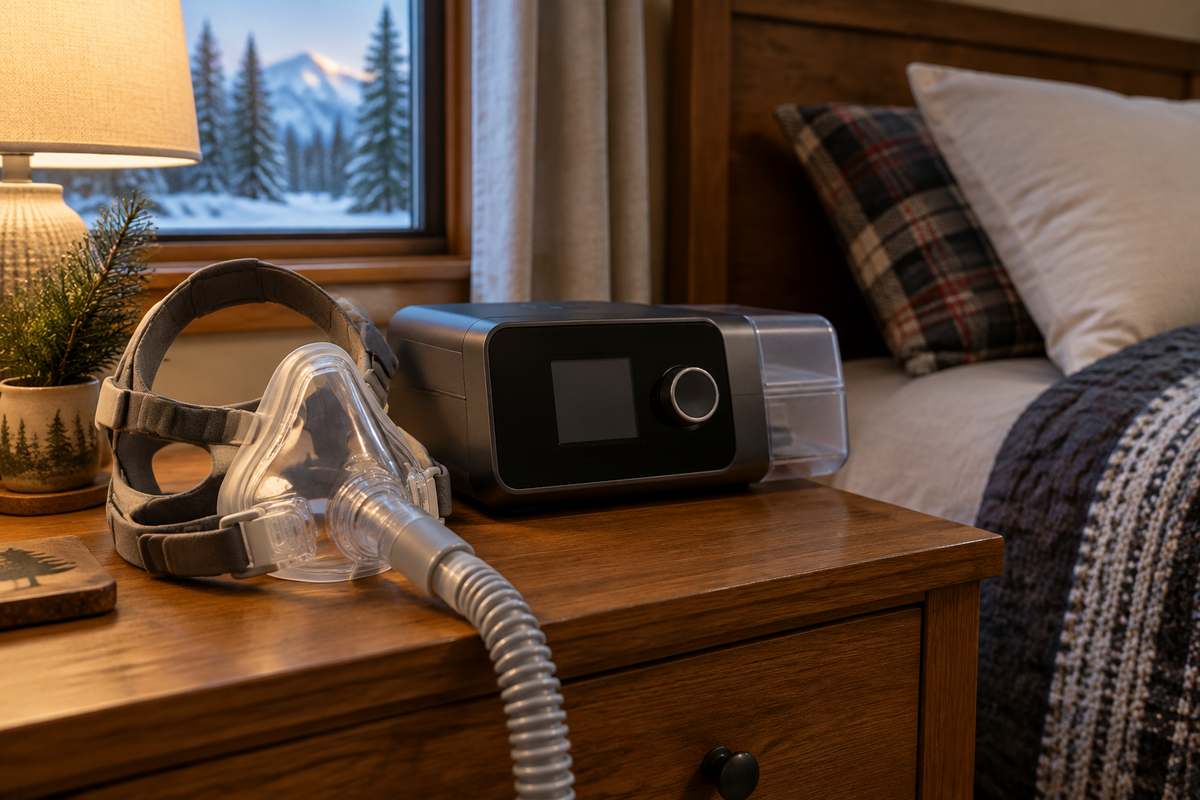
If you breathe through your mouth during sleep, nasal and nasal pillow CPAP masks simply will not work for you. When your mouth opens during therapy, pressurized air escapes, the mask loses its seal, and your sleep apnea goes untreated for those periods. The solution is straightforward: a full-face mask that covers both your nose and mouth. But not all full-face masks are equally comfortable, and choosing the right one makes the difference between therapy you can maintain and therapy you give up on.
Why Mouth Breathing Matters for CPAP Therapy
CPAP therapy delivers continuous pressurized air through your mask to keep your airway open. If you are using a nasal mask and your mouth opens during sleep, the air your machine is delivering exits through your mouth rather than going to work on your airway. Your machine detects a pressure drop and compensates by delivering more pressure, but the fundamental problem remains: the seal is broken.
Mouth breathing during CPAP therapy causes dry mouth, throat irritation, and disrupted sleep. Many users who report that CPAP is not working for them are experiencing exactly this problem, often without realizing their mouth is opening. If you wake up with a very dry mouth or throat, or your bed partner tells you that you breathe through your mouth during sleep, a full-face mask is almost certainly the right solution.
Some users manage mouth breathing with a chinstrap, which holds the jaw closed and keeps the mouth shut during nasal mask use. A chinstrap can work for mild mouth breathing, but for consistent mouth breathers it is a workaround rather than a real fix. A full-face mask is more reliable and more comfortable for most users in this situation.
Best Full-Face CPAP Masks for Mouth Breathers in Canada
ResMed AirFit F20
The ResMed AirFit F20 is Canada's most widely prescribed full-face CPAP mask and the natural starting point for most mouth breathers. Its InfinitySeal cushion flexes and adapts to different face shapes and sleeping positions, which makes it more forgiving than rigidly designed alternatives. The magnetic headgear clips make putting on and removing the mask fast and easy, and the QuietAir elbow reduces exhaled air noise significantly compared to older full-face designs.
The F20 is available in small, medium, and large, and in a for Her version with smaller sizing for women and users with narrower faces. If you are new to CPAP and unsure where to start with full-face masks, the AirFit F20 is the most sensible first choice.
ResMed AirTouch F20
The ResMed AirTouch F20 uses the same frame and headgear as the AirFit F20 but replaces the silicone cushion with a memory foam UltraSoft cushion. Memory foam conforms to your facial contours with gentle pressure rather than relying on the spring-back tension of silicone. The result is a mask that feels lighter against your face and leaves fewer marks, particularly around the nose bridge and chin.
The trade-off is maintenance. Memory foam cushions cannot be washed and need replacement every month to six weeks, which is more frequent than silicone. For users who experience skin irritation from silicone cushions or who have struggled with marks from over-tightening a standard full-face mask, the AirTouch F20 is often the more comfortable long-term solution.
ResMed AirFit F30i
The ResMed AirFit F30i is a full-face mask designed specifically for side sleepers and active sleepers who need full-face coverage. The hose connects at the top of the head rather than the front of the mask, which eliminates the leverage that causes most full-face masks to shift when you roll to one side. The cushion seals under the nose rather than over the nose bridge, which reduces total contact area and makes the mask feel less intrusive.
For mouth breathers who are also side sleepers, the F30i is often the better choice over the F20. It provides the same full-face coverage without the hose drag that makes side sleeping with a traditional full-face mask uncomfortable. Browse the full range of full-face CPAP masks at PAPSmart to compare both options side by side.
Philips Respironics DreamWear Full Face
The Philips Respironics DreamWear Full Face is an under-nose full-face mask that seals below the nose rather than over the nose bridge and cheeks. This minimal-contact design significantly reduces the total surface area against your face compared to a traditional full-face mask. The hose routes through the headgear frame to the top of the head, keeping the front of the face clear.
For users who feel claustrophobic in traditional full-face masks, or who experience chronic nose bridge pressure marks despite adjusting strap tension, the DreamWear Full Face is one of the most practical alternatives. It still covers the mouth, making it suitable for mouth breathers, while dramatically reducing the amount of mask material sitting against the face.
Fisher and Paykel Vitera
The Fisher and Paykel Vitera uses the brand's RollFit XT seal, a cushion that pivots at the nose bridge to maintain contact when your head moves. For mouth breathers who are active sleepers and shift positions frequently during the night, the Vitera's adaptive seal reduces the likelihood of losing the seal when you roll over. The split-strap headgear distributes tension more evenly than a single strap, allowing a comfortable fit at lower tension settings.
Full-Face Mask Comparison for Mouth Breathers
| Mask | Cushion Type | Hose Position | Best For |
|---|---|---|---|
| ResMed AirFit F20 | Silicone InfinitySeal | Front | Most users, first-time buyers |
| ResMed AirTouch F20 | Memory foam UltraSoft | Front | Skin irritation, fewer marks |
| ResMed AirFit F30i | Silicone under-nose | Top of head | Side sleepers, active sleepers |
| Philips DreamWear Full Face | Silicone under-nose | Top of head | Claustrophobic users, minimal contact |
| Fisher and Paykel Vitera | Silicone RollFit XT | Front | Active sleepers, nose bridge leaks |
Tips for Getting the Best Fit With a Full-Face Mask
Full-face masks require a little more attention to fit than nasal options because the seal covers a larger surface area. The most common mistake is over-tightening the headgear. A properly fitted full-face mask should seal with gentle, even contact, not a firm clamp. If you are tightening the straps beyond their original position to stop leaks, the cushion is likely worn and needs replacing rather than more strap tension.
Fit the mask while lying in your typical sleeping position, not while sitting upright. A mask that fits well when you are sitting up often gaps at the nose bridge or chin when you lie down. Putting the mask on, starting the machine, and then checking for leaks in your sleep position takes an extra two minutes and saves significant frustration during the night.
Replace your cushion on schedule. Silicone cushions should be replaced every one to three months. A worn cushion loses its sealing ability and requires increasing headgear tension to compensate. Keeping up with cushion replacement is the single most effective thing you can do to maintain a reliable seal.
Frequently Asked Questions
What is the best CPAP mask for mouth breathers in Canada?
The ResMed AirFit F20 is the most widely used full-face mask for mouth breathers in Canada and a strong starting point for most users. Side sleepers who need full-face coverage often do better with the AirFit F30i due to its top-of-head hose routing.
Can I use a chinstrap instead of a full-face mask?
A chinstrap can help mild mouth breathers maintain a closed mouth during nasal mask use. For consistent mouth breathers, a full-face mask is more reliable. A chinstrap is also less effective if you have nasal congestion, since a blocked nose naturally leads to mouth breathing regardless of jaw position.
Will a full-face mask work with my current CPAP machine?
Yes. Full-face masks use a standard 22mm connection compatible with ResMed, Philips Respironics, and Fisher and Paykel CPAP and BiPAP machines. Check compatibility for the ResMed AirMini, which uses proprietary connectors for some mask styles.
Why does my full-face mask leak even when I tighten it?
Over-tightening a full-face mask often makes leaks worse by distorting the cushion edge. Try loosening the straps slightly and refitting the mask while lying in your sleep position. If leaks persist, the cushion likely needs replacing.
How often should I replace a full-face CPAP mask cushion?
Silicone cushions every one to three months. Memory foam cushions every one to six weeks. Worn cushions lose their sealing ability regardless of headgear tension, so replacing on schedule is more effective than adjusting straps.


