

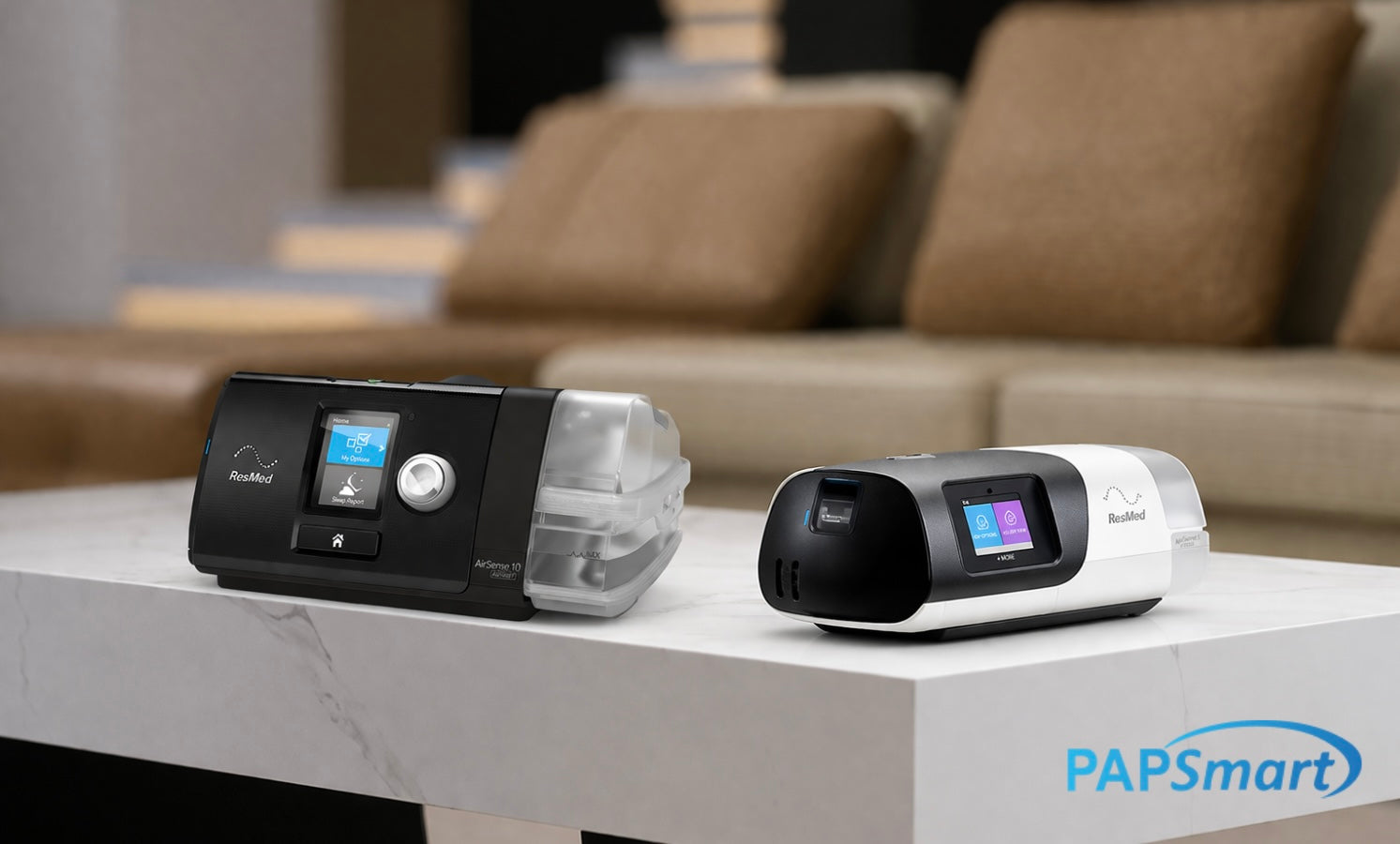
ResMed AirSense 11 vs AirSense 10: Price, Features & Which One to Buy
If you're shopping for a new CPAP machine, chances are you've already landed on ResMed as your brand — and for good reason. But narrowing it down to the AirSense 11 vs AirSense 10 is where it gets tricky. They look similar on the surface, they both work, and yet the price difference is real. So what are you actually paying for?
Let's walk through it properly so you can make a confident decision.
Quick Comparison: AirSense 11 vs AirSense 10
|
Feature |
ResMed AirSense 11 |
ResMed AirSense 10 |
|
Generation |
Newer |
Previous |
|
Display |
Full colour touchscreen |
Dial + physical buttons |
|
App Integration |
Enhanced myAir |
Standard myAir |
|
AutoSet Mode |
Yes |
Yes |
|
Built-in Humidifier |
Yes |
Yes |
|
Design |
Sleeker, compact |
Slightly larger |
|
Price (Canada) |
Higher |
More budget-friendly |
Both models are available in AutoSet (APAP) and fixed-pressure CPAP configurations — your prescription will determine which is right for you.
ResMed AirSense 11: What's Actually New?
The ResMed AirSense 11 is ResMed's current flagship CPAP machine, and the upgrades are genuinely useful — not just marketing fluff.
The biggest change most people notice right away is the full colour touchscreen. Gone are the days of hunting through dial menus at 2am. The interface is intuitive enough that plenty of first-time CPAP users get through setup without needing to call anyone.
Beyond the screen, the AirSense 11 connects more seamlessly with the myAir app, giving you nightly sleep scores, usage data, and therapy coaching on your phone. For people who actually want to understand their therapy — whether that's tracking AHI events or just confirming the machine is doing its job — this is a meaningful upgrade.
Other standout features:
-
Guided setup with on-screen instructions
-
Advanced event detection and reporting
-
Improved Bluetooth connectivity
-
AutoSet pressure adjustments that respond to your breathing in real time
Best for: First-time CPAP users, anyone who wants app-connected therapy tracking, and patients who value a clean, modern setup experience.
ResMed AirSense 10: Still Worth Buying in 2024?
Short answer: yes.
The ResMed AirSense 10 has been the gold standard in ResMed CPAP machines for years — and it didn't suddenly become a bad machine just because a newer model exists. Its AutoSet algorithm is proven, it runs quietly, and the integrated humidifier works exactly as it should.
What it doesn't have is a touchscreen or the same level of app integration. The dial-and-button interface feels dated compared to the 11, but plenty of longtime CPAP users actually prefer it. There's something to be said for a physical control you can find in the dark without thinking.
The other big factor: price. The AirSense 10 comes in at a noticeably lower price point, which matters if you're paying out of pocket or your insurance only covers part of the cost.
Best for: Budget-conscious buyers, experienced CPAP users upgrading from an older device, and anyone who doesn't need or want smartphone connectivity.
Price Comparison: AirSense 11 vs AirSense 10 in Canada
Pricing varies slightly by configuration (AutoSet vs fixed CPAP), but here's the general landscape:
-
ResMed AirSense 10 — lower entry price, strong value for a proven machine
-
ResMed AirSense 11 — premium price reflecting upgraded interface and connectivity
If the digital features genuinely matter to your therapy routine, the AirSense 11 is worth the extra spend. If you just need a reliable machine that does the job, the AirSense 10 delivers without the premium.
Note: Many private health insurance plans in Canada cover a portion of CPAP equipment costs. Check your policy before purchasing — it could change the math significantly.
Masks & Compatibility: What Works With Each Machine?
Good news: both machines are compatible with the full range of ResMed masks, including:
-
Nasal masks
-
Full-face masks
-
Nasal pillow masks
Mask fit is arguably more important to therapy success than which machine you choose. If you're unsure which mask style suits you, it's worth spending time on that decision before you finalize your machine purchase.
Filters & Replacement Parts
Both the AirSense 10 and AirSense 11 need routine maintenance to keep performing properly. The good news is that AirSense filters and CPAP replacement parts are affordable and easy to swap out yourself.
Here's what needs regular replacing:
-
Filters — monthly (disposable) or every 6 months (reusable foam filter)
-
Humidifier chamber — every 6–12 months
-
CPAP tubing — every 3–6 months
-
Mask cushions and headgear — per manufacturer guidelines
Staying on top of these replacements isn't just about hygiene — it also protects the machine itself and keeps your airflow consistent.
So, Which One Should You Buy?
Here's the honest version:
Choose the AirSense 11 if you're new to CPAP therapy, you want the best available interface, or app-based tracking would genuinely help you stay consistent with treatment. The touchscreen and enhanced myAir integration make the learning curve much gentler.
Choose the AirSense 10 if you're watching your budget, you've used CPAP before and don't need hand-holding, or you simply prefer physical controls. It's a machine with a long, trusted track record — there's no shame in going with what works.
Either way, you're choosing a quality device from one of the most trusted names in sleep apnea treatment. The difference is mostly about interface and features, not therapy effectiveness.
Frequently Asked Questions
Is the ResMed AirSense 11 worth the extra cost? For first-time users or anyone who wants app connectivity and guided setup, yes. For experienced users on a budget, the AirSense 10 remains an excellent option.
Are AirSense 10 and 11 masks interchangeable? Yes — both machines use standard ResMed mask connections and are compatible with the same range of ResMed masks.
Does insurance cover ResMed CPAP machines in Canada? Many private health plans cover CPAP equipment partially or fully with a valid prescription. Coverage varies by provider, so confirm with your insurer before purchasing.
How often do I need to replace AirSense filters? Disposable filters should be replaced monthly. Reusable foam filters can last up to 6 months with regular cleaning.


