

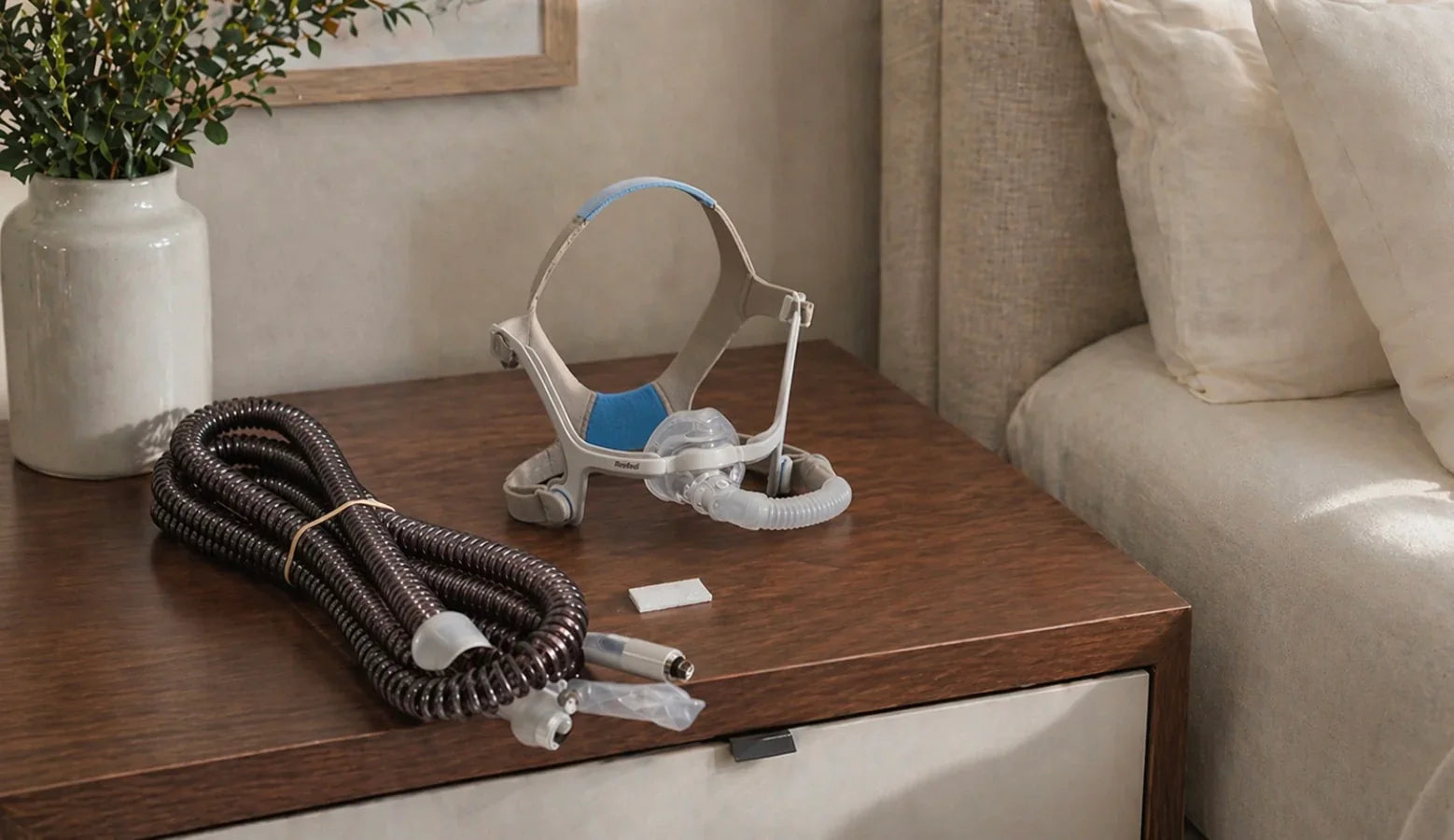
Your CPAP replacement schedule determines how well your therapy actually works, not just how clean things look. When CPAP filters clog, tubing cracks, or mask cushions go soft, your machine works harder and your sleep gets worse. The good news is that replacing CPAP parts is straightforward and affordable. This guide covers every key component, how often to replace it, and what signs to watch for. Whether you are new to therapy or just overdue for a refresh, you will find a clear plan here. You can also shop CPAP supplies and accessories at PAPSmart Canada to stock up on everything in one place.
How Often to Replace CPAP Filters
CPAP filters are the first line of defence for your machine. They trap dust, pollen, pet dander, and fine particles before they reach your airway. However, a dirty or clogged filter does the opposite of its job. It restricts airflow and forces your machine to work harder to maintain pressure.
Most CPAP machines use two filter types. The first is a disposable fine filter, which traps the smallest particles. Replace this one every two to four weeks. The second is a reusable foam filter, which catches larger debris. Rinse it weekly and replace it every three to six months.
If you have pets or live somewhere dusty, replace your filters more often than the standard schedule. A grey or discoloured filter is a clear sign it needs to go. Because restricted airflow affects pressure delivery, staying on top of your filter schedule protects both your therapy and your machine's motor.
For example, Philips Respironics DreamStation machines use a two-stage system with a reusable pollen filter paired with a disposable fine filter. ResMed machines like the AirSense 10 and AirSense 11 follow a similar two-filter approach. Always match your filter to your specific machine model for the best fit and performance.
When to Replace CPAP Tubing
CPAP tubing connects your machine to your mask. It carries pressurised air every single night, so wear and tear adds up fast. Replace your tubing every three to six months, or sooner if you notice any of these warning signs:
- Cracks or small holes in the tube wall
- Discolouration or a yellowing tint
- An unusual or musty smell
- Increased air leaks during use
Clean your tubing weekly with warm, soapy water. Rinse it thoroughly and hang it to dry completely before reattaching. Never reconnect damp tubing because moisture trapped inside creates the right conditions for mould growth.
Some users upgrade to heated tubing, which reduces condensation inside the hose overnight. If you wake up with water droplets in your tube, a problem called rainout, heated tubing solves this cleanly. Additionally, heated tubing pairs well with a humidifier to keep the warm, moist air from cooling before it reaches your mask. You can find CPAP humidification and heated tubing options at PAPSmart to cut down on rainout.
CPAP Mask Replacement: Cushions, Headgear, and Frames
Your CPAP mask has several components, and each one wears out at a different rate. A poor mask seal is one of the most common reasons therapy fails, not because the machine is broken, but because the mask no longer fits properly.
Here is a general guide for each mask component:
- Cushions and pillows: Replace every one to three months. Skin oils and moisture break down the silicone quickly, causing air leaks around the edges.
- Headgear: Replace every six months. The elastic stretches over time and loses its ability to hold the mask in position.
- Mask frame: Replace every six to twelve months, or sooner if you notice cracking or warping.
Therefore, even if your mask feels fine, a worn cushion is often the reason you are waking up with strap marks or leaks. A CPAP refit, trying a new cushion size or mask style, can make a significant difference in comfort and effectiveness. If your current mask is not sealing well, browse CPAP masks in Canada at PAPSmart to find a better-fitting option.
Complete CPAP Replacement Schedule at a Glance
Use this table as a quick reference. Bookmark it or print it out and keep it with your machine.
| CPAP Part | Replace Every | Clean How Often |
|---|---|---|
| Disposable fine filter | 2 to 4 weeks | Do not wash, dispose and replace |
| Reusable foam filter | 3 to 6 months | Weekly rinse |
| CPAP tubing | 3 to 6 months | Weekly wash |
| Mask cushion / pillow | 1 to 3 months | Daily wipe, weekly wash |
| Mask headgear | 6 months | Weekly wash |
| Mask frame | 6 to 12 months | Weekly wash |
| Humidifier water chamber | 6 to 12 months | Daily rinse, weekly wash |
Signs You Need to Replace CPAP Parts Sooner
Your CPAP replacement schedule gives you a baseline. However, your body and your machine will often tell you when something needs replacing ahead of schedule. Watch for these signals:
- Increased leaks: Air blowing around your mask edge or into your eyes means the cushion seal has broken down.
- Louder machine noise: A clogged filter or blocked airway forces the motor to work harder. This often shows up as extra noise.
- Morning headaches or dry mouth: These symptoms can point to pressure changes caused by filter blockage or tubing leaks.
- Visible wear or smell: Any discolouration, cracking, or odour is a clear replacement signal, regardless of how long you have had the part.
In contrast, do not wait until something fails completely. Replacing parts on schedule costs far less than repairing a machine damaged by restricted airflow. For a full overview of what to keep on hand, read our guide on essential CPAP supplies and accessories.
Frequently Asked Questions
How often should I replace CPAP filters?
Replace disposable fine filters every two to four weeks. Replace reusable foam filters every three to six months, but rinse them weekly. If you have pets or allergies, replace both types more frequently than the standard schedule.
Can I wash a disposable CPAP filter?
No. Disposable filters are designed for single use and should not be washed. Washing them damages the filter material and reduces their ability to trap particles. Simply discard the old filter and insert a new one.
How do I know if my CPAP mask needs replacing?
The clearest signs are air leaking around the edges, marks on your face in the morning, or a mask that no longer stays in place despite tight headgear. If cleaning does not fix the seal, the cushion has broken down and needs replacing. A CPAP refit with a new cushion size is often all it takes.
How long does CPAP tubing last?
Standard CPAP tubing typically lasts three to six months with proper weekly cleaning. Replace it sooner if you see cracks, smell an odour, or notice air leaking from the hose. Heated tubing may last a similar duration but should be checked regularly for damage near the connectors.
Where can I buy CPAP replacement parts in Canada?
PAPSmart carries a full range of replacement filters, tubing, mask cushions, headgear, and humidifier chambers for ResMed, Philips Respironics, and Fisher & Paykel machines. Shipping is fast and prices are among the lowest from an authorized Canadian retailer.
Keep Your Therapy Running at Full Strength
Following your CPAP replacement schedule is the single most effective thing you can do to protect your therapy between machine services. Fresh CPAP filters, clean tubing, and a well-fitting mask ensure your machine delivers the right pressure every night. Finally, replacing parts on time also extends the life of the machine itself, so it pays for itself many times over. Stock up on everything you need by browsing CPAP supplies in Canada at PAPSmart, where you will find brand-matched parts for ResMed, Respironics, and Fisher & Paykel machines at Canada's best prices.


